
Multimedia Blog
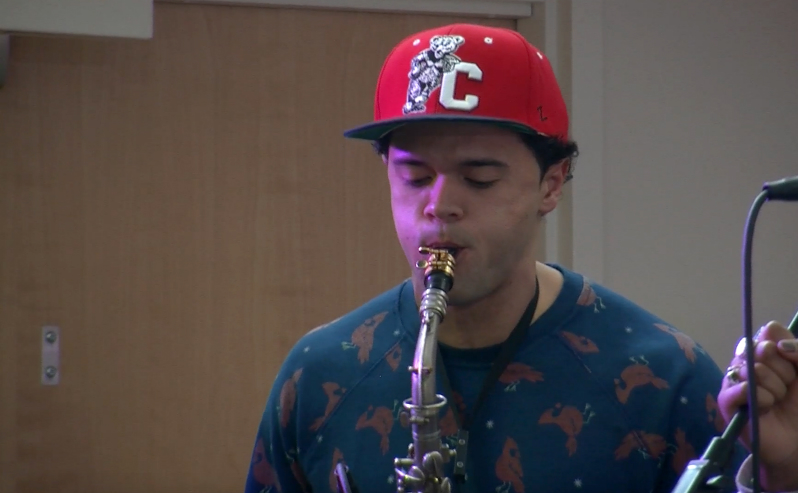
As national jazz sales dwindle, genre alive and well in Ithaca
Head on over to Ithaca Week to see this story I co-wrote with Max Ocean this week.
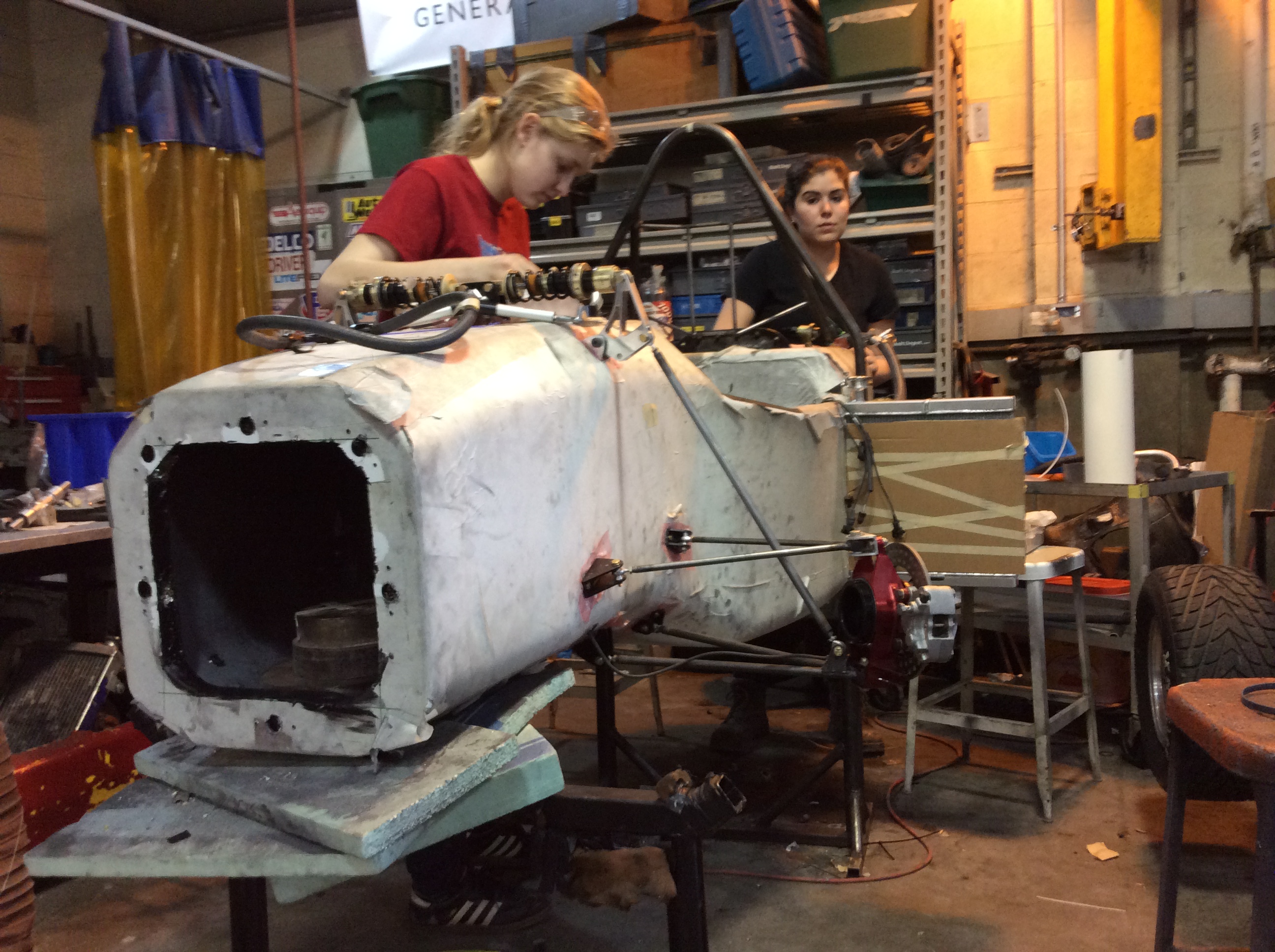
Cornell car-racing team gears up amid national growth in sport
Car racing is now more popular than the NHL and the NBA. Read my latest story for Ithaca Week here.
Catholics hold day of penance, as millions return to faith
Check-out the religion piece I co-authored with Emma Rizzo for Ithaca Week.
Patchwork of transgender laws forget “T” of LGBT community
The following story was co-authored by myself and Max Ocean. It has been republished from Ithaca Week. Here is a link to the original story.
—
Kaleb Marschalk was born a woman, but knew inside he was a man. With the support of his family and friends, he changed his name and started to transition. He never experienced serious discrimination in response to his new identity until he said a teacher at his former technical school, TST BOCES, began referring to him as “he/she” and sometimes “it” in 2014.
“I’ve never experienced that anywhere else,” Marschalk said. “Never.”
While 18 states and the District of Columbia currently have non-discrimination laws on the books that protect transgender individuals, New York is not one of them. But Ithaca and Tompkins County are among 12 localities that have passed a patchwork of local laws to compensate for transgender equality legislation that has died in the state Senate for the better part of a decade.
On March 12, press conferences were held in New York City, Albany, Rochester, Syracuse and Tompkins County in support of a renewed push for the passage of the Gender Expression Non-Discrimination Act (GENDA), which would give transgender individuals equal protection under state law.
“A college student who lives in Suffolk County who has to drive to Buffalo to go to college is going to be passing through Nassau County, which doesn’t have local protections, where he or she could be kicked out of a restaurant, not allowed to use the gender-correct bathroom,” Byrgen Finkleman, who runs the advocacy organization Affirming Transgender Identities, said.
New York’s local laws are “inconsistent, limited and, at times, weaker than the state human rights law,” according to the Williams Institute at UCLA, a national think tank that researches sexual orientation and gender identity law and public policy.
Transgender legislation at the state level would provide legal protection from the harassment Kaleb faced from his teacher and would allow him to use the men’s bathroom. With the help of the LGBT clinic at Cornell Law School, Kaleb—who is now in college— has filed a complaint with the U.S. Department of Education’s Office of Civil Rights, which allowed the school to handle the matter internally, yielding no resolution. Despite Tompkins County’s transgender protections, Kaleb’s case fell through the cracks.
While Marschalk applauded Ithaca and Tompkins County for being at the forefront of gender identity laws, the county-by-county inconsistencies pose problems for transgender people.
“I think it’s great that they want to pass GENDA,” Marschalk said. “But at the same time, I think it’s going to take a while.”
A 2008 poll by the Global Strategy Group found that 78 percent of New Yorkers supported protections against discrimination for transgender people, but that has not translated to state legislation. Between 2007 and 2014, the State Assembly passed GENDA seven times––all but once with bipartisan support. Each time it has stalled in a Senate committee.
New York’s SONDA (Sexual Orientation Non-Discrimination Act) which became law in 2002 prevents discrimination based on sexual orientation but not gender identity.
“The folks who were trying to make decisions about what the bill should include really thought that if they did not include transgender people, the bill had a better chance of passing,” Luca Maurer, LGBT Education, Outreach & Services Program Director at Ithaca College, said.
Maurer, who helped spearhead the local campaign for transgender equality and took part in the SONDA talks, does not believe the bill was ill-intentioned. The trans community was, however, made promises that laws to protect them would be passed next, he said.
“But that’s not what happened, and it’s really sad,” Maurer said.
“We have a lot of work to do,” even in Ithaca, Pat Pryor, a former council member who chairs the county’s volunteer human rights commission, said. Pryor said the transgender community has not seen nearly the amount of progress the rest of the LGBT community has experienced.
“I think we need to be louder,” Marschalk said. “I think we need to demand to be heard.”
Ithaca named most economically segregated city of its size
Click here to read my collaboration with Brandon Glass about a study that named Ithaca the most economically segregated city of its size.
Lansing mine earns $26 million more than last year, State says
Click here to read my collaboration with Opal Bogdan about how the coldest winter on record is impacting a local salt mine.
Cornell’s new genetic “switch” could detect deadly diseases
The following story was co-authored by myself and Karly Redpath. It has been republished from Ithaca Week. Here is a link to the original story.
—
A Cornell professor and his team of biologists built a synthetic switch that can turn on the gene expression process—the basis of life—which could help doctors detect diseases and permanently transform genetic engineering.
In a study published online Feb. 2 in Nature Chemical Biology, Julius Lucks, assistant professor of chemical and biomolecular engineering, and his team of graduate and undergraduate researchers, describe how they genetically engineered tiny ribonucleic acids (RNA) that can kick-start genes in the human body.
“These new RNA molecules can now fire up the hard drive,” Lucks said.
What he means is that if DNA is the body’s hard drive, then RNA are the circuits, and his team has built a switch to turn on those circuits. For example, the “on” switch could be used to turn on a gene that would release healthy bacteria, Lucks said, which would help someone better digest food.
“The vision that he had for it, it was just hard not to kind of jump on that dream,” James Chappell, the postdoctoral associate who co-authored the study, said. “It’s very exciting.”
The “on” switches, which have been nicknamed STARS—an acronym for their scientific term—could potentially be repurposed to turn something a different color if they detected a disease. Because the switches are made of RNA, they could be built to detect many of the world’s deadliest viruses—like HIV and even the flu—which are also made of RNA. For example, if the switch was put in a piece of paper, it could change the paper’s color if it touched a drop of blood positive for a disease. The same process was recently used to detect Ebola, using another variation of the RNA switch that acts in a different way.
“I don’t know if our molecule would be able to treat the disease,” Lucks said. “It might be able to detect the disease. But, certainly the knowledge of the fact that RNA can now do this thing would make you want to revisit your understanding of a lot of biology.”
Roughly a year and a half was spent developing and proving the genetic switch would work. Starting with a genetic repressor—or “off” switch, the team found a way to convert it into an “on” switch. Instead of shutting genes off, the invention makes them express themselves.
“I did one strategy and James did one strategy,” Melissa Takahashi, a graduate student and second co-author of the study, said. “The one that James did ended up being much simpler so most of the paper is about that one.”
Cornell’s Department of Chemical and Biomolecular Engineering praised the findings of the more than 20 researchers who worked on building the RNA switch as a leap forward in genetic research.
“It defines an elegant path towards creation of regulatory circuits that facilitate sophisticated engineering and control of the molecular processes that govern biology,” Lynden Archer, chair of the department, said.
The National Science Foundation and Office of Naval Researchers were among the study’s supporters. Several new research organizations have contacted Lucks to study applications for the genetic switch.
“We’ve started a number of new collaborations to use this mechanism in all sorts of different ways,” Lucks said.
The RNA switch, he said, represents a “hot” area of research, partially because of its simplicity. Nature has evolved beautifully but in complicated ways, Lucks said, because it did not evolve to be understood. The RNA switch was built to be a simple solution from the start.
Public school shake-ups boost enrollment at Montessori schools
The following story was co-authored by myself and Emma Rizzo. It has been republished from Ithaca Week. Here is a link to the original story.
—
Enrollment at three Ithaca-area Montessori schools has reached record levels in the 2014-2015 academic year, a fact educators are attributing to changes in the public school system, most notably the introduction of the Common Core.
Enrollment at Namaste Montessori School, founded in 2004, on Trumansburg Road has doubled every three years, and there are now 75 students between the two buildings. Elizabeth Ann Clune Montessori School of Ithaca has more than three times as many students: 230. Principal Laura Gottfried said it is the largest enrollment to date, since the school opened in 1980.
“It is definitely a given that we have had a lot of interest, many visitors, many people who have actually enrolled their children over the last three years because of Common Core,” Gottfried said. “People are not happy about Common Core.”
The standards outlined in the Common Core curriculum are meant to universalize expectations for students at each grade level, according to the initiative’s website. But, Bridgid Beames, head of Namaste Montessori School, said public school teachers are not being allowed to teach. Emphasis in public schools, she said, is being placed on numbers and test scores rather than mastery of a given subject.
“In Montessori, our goal is to work towards mastery. So, children progress at their own pace,” Beames said. “When they master something, they move on to the next lesson.”
Montessori education traces its roots to Italy in the early 20th century. The focus is hands-on learning, Beames said, and a view of students as seeds to be nurtured rather than empty vessels to be filled with knowledge. Most modern Montessori schools in the United States are elementary-age programs.
The Montessori approach is taking root nationwide. Timothy Seldin, president of The Montessori Foundation, said there is no doubt enrollment continues to grow in the U.S.
“Our best estimate is that there are approximately a million students in some 5,000 Montessori schools,” Seldin said.
Seventeen of those students attend Trumansburg Montessori, a one-room schoolhouse owned by Laura Reid. She intended her small structure to accommodate only 16 students but decided to exceed capacity so two siblings could attend together.
“I’ve really grown enrollment a lot over the past few years and particularly over the past two years,” Reid said. “I have a waitlist now, at least a couple years long.”
Elizabeth Ann Clune, too, maintains a long waitlist. Montessori students, Gottfried said, are undoubtedly better off than their peers in the public school system, from where many of her applicants come.
“Something about that experience has affected their development in a way that is less than optimal,” Gottfried said. “They could come in anxious, they could come in shut down, they could come in afraid to risk academically.”
A spokeswoman from the New York State Education Department said she would not comment on local matters.
“As far as I’ve seen, the Common Core Standards themselves aren’t problematic,” Gordon Bonnet, a science teacher at Trumansburg High School, said in a statement. “But in practice, the implementation of these standards has been haphazard.”
While Montessori schools focus on the child, Beames said, public schools focus instead on performance, a trend that may be influenced by money.
“In our public schools, it’s all about the money. You can follow the paper trail. Why Montessori hasn’t caught on in public schools? I personally think it’s about politics and money,” Beames said.
Textbook companies fund political campaigns, Beames said. Namaste does not use textbooks, and instead the school relies heavily on primary sources, which is a selling point for some parents. Beames said the average parents in Ithaca are highly educated and read and research the best school options.
Even Bonnet, who has been a public school teacher himself for 28 years, said if his two sons were in elementary school today, he would seriously look at alternative options.
“The system as it stands takes little interest in kids’ creativity, engagement, and different learning styles and rates.”
Under the Montessori style, Gottfried said, students are typically more grounded than children at their age.
“They have a sense of what they want, how to get what they want,” Gottfried said.
“Montessori education engages intellectual curiosity,” Maria Morog, the mother of a sixth grade son who attends Namaste Montessori School, said. “There is an energy and an excitement about learning in the Montessori classroom,” Morog said. “Teachers seem to work with the kids in a way that engages their natural curiosity about the world and teaches them the tools to grow academically.”
Montessori teachers said the enrollment increase is due to trust in the Montessori system.
“I think that it’s a philosophy that has been in place for a very long time,” Liz Allen, a teacher at Elizabeth Ann Clune Montessori School of Ithaca, said. “It’s a proven philosophy. That’s not to say that we don’t tweak it with current research, because we do.”
While Montessori schools strive to better their teaching of each subject, public schools are in a constant state of experimentation, Allen said. These changes, she said, are driving families away from the public school system and into alternative education.
As local Montessori education continues to grow, some educators said they hoped the philosophy would extend to older students. Though the endeavor would be costly and no plans have been made, Beames said Ithaca is due for a Montessori high school.
 Stephen Adams